
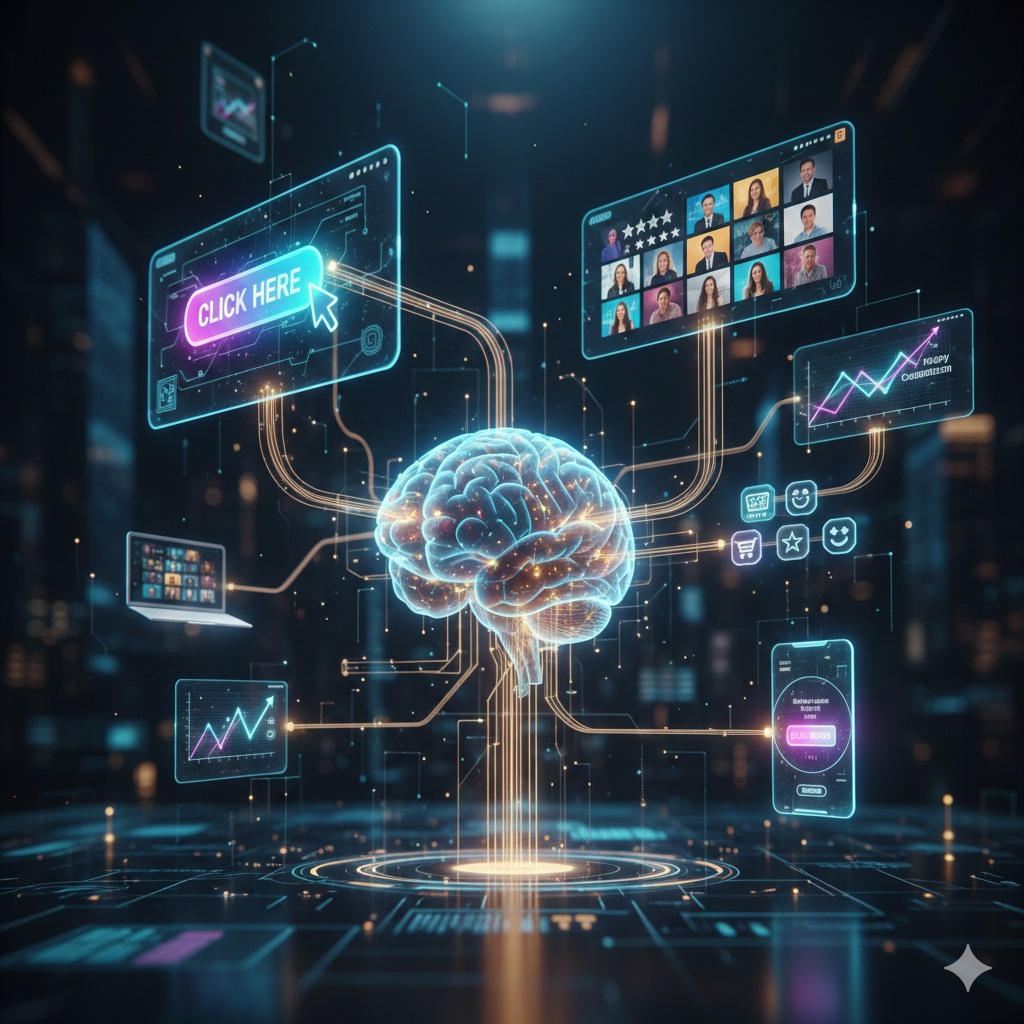
Have you ever wondered why you can spend an hour looking at a magazine and buy nothing, but after seeing one 15-second Instagram ad, you’ve already entered your credit card details?
It’s not an accident. It’s Digital Psychology.
Traditional marketing (billboards, TV, print) is built on awareness. Digital marketing is built on action. Here is the psychological breakdown of why digital interactions lead to faster sales and higher conversion rates.
1. The Power of “Micro-Moments”
In traditional marketing, there is a massive gap between stimulus (seeing the ad) and action (buying the product). If you see a billboard for a lawnmower while driving, you can’t buy it right then. By the time you get home, the impulse is gone.
Digital marketing capitalizes on Micro-Moments—the exact second a consumer thinks, “I want to know,” “I want to go,” or “I want to buy.”
The Digital Edge: The “Click” bridges the gap between desire and ownership in less than two seconds.
2. Reduced “Cognitive Friction”
Psychologically, humans are wired to take the path of least resistance. Traditional marketing requires high effort: you have to remember a phone number, visit a store, or wait for a scheduled TV commercial.
Digital marketing uses a concept called Frictionless Conversion.
- One-Click Buying: Removes the “pain of paying.”
- Auto-fill Forms: Removes the “boredom of typing.”
- Direct Links: Removes the “effort of searching.”
3. The “Social Proof” Feedback Loop
When you see a newspaper ad, you are taking the brand’s word for it. When you see a digital ad or a product page, you see The Herd Effect. We are biologically programmed to look to others for “safety” in our decisions. Seeing “500 people bought this in the last 24 hours” or reading 4.5-star reviews triggers a psychological release of dopamine. It lowers the perceived risk of the purchase instantly.
4. The Retargeting “Consistency” Bias
Have you noticed how an item you looked at once seems to “follow” you across the internet? This utilizes the Frequency Illusion (also known as the Baader-Meinhof phenomenon).
Once our brains become aware of a product, we start seeing it everywhere. Digital retargeting tricks the brain into thinking the product is more popular or “important” than it actually is, leading to a sense of familiarity. In psychology, Familiarity = Trust.
5. The Dopamine Hit of the Instant Reward
The “Click” itself provides a tiny hit of dopamine. Whether it’s signing up for a newsletter to get a 10% discount code or receiving an instant “Order Confirmed” email, digital marketing provides immediate feedback.